For laboratory research use only. Not for human consumption.

EU
0
Product | L-Carnitine / L-Arginine Based Amino Blend

L-Carnitine / L-Arginine Based Amino Blend

Compound CAS# Chemical Formula Net Content/mL
L-Carnitine 541-15-1 C₇H₁₅NO₃ 400 mg/mL
L-Arginine HCl 1119-34-2 C₆H₁₅ClN₄O₂ 100 mg/mL
L-Ornithine HCl 3184-13-2 C₅H₁₃ClN₂O₂ 100 mg/mL

Log in to view prices

Want to be notified when this product is back in stock?

What is L-Carnitine / L-Arginine Based Amino Blend?

L-Carnitine / L-Arginine Based Amino Blend is a three-component research solution of L-carnitine (400 mg/mL) with L-arginine hydrochloride and L-ornithine hydrochloride (100 mg/mL each). L-carnitine, not arginine, is the main component: it makes up 400 of the 600 mg/mL of listed components.

L-carnitine shuttles long-chain acyl groups into mitochondria through CPT1 and CPT2 (McGarry & Brown, 1997). L-arginine and L-ornithine sit on either side of arginase, which hydrolyzes L-arginine to L-ornithine and urea (Wu & Morris, 1998), and L-ornithine feeds polyamine synthesis through ornithine decarboxylase (Pegg, 2006).

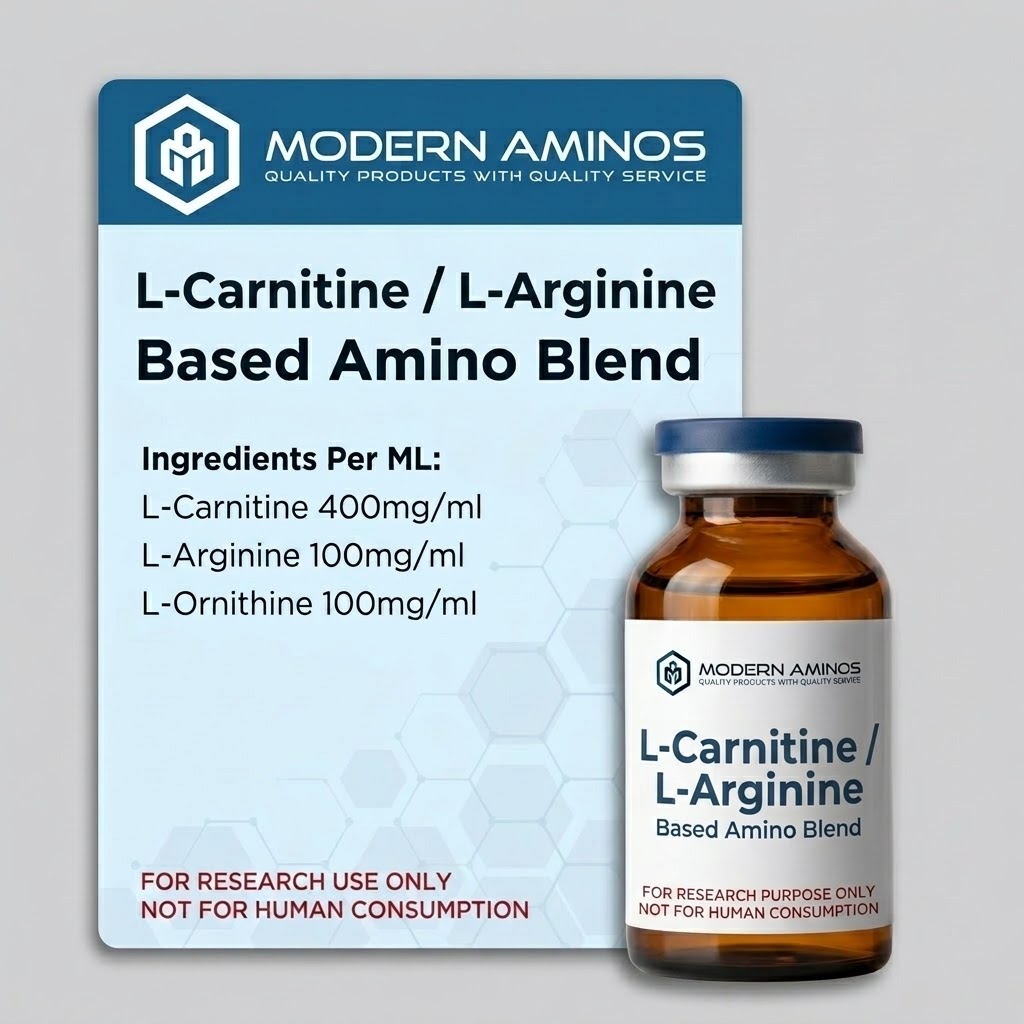
Batch-verified at Modern Aminos, it is supplied in one laboratory format, a 20 mL vial. The carrier is a water-based solution with benzyl alcohol (1%) as the preservative. Per-mL composition:

  • L-Carnitine: 400 mg/mL
  • L-Arginine HCl: 100 mg/mL
  • L-Ornithine HCl: 100 mg/mL

Laboratories building metabolic panels often place it next to public reference listings such as DADA (Diisopropylamine Dichloroacetate).

Chemical and Molecular Data for L-Carnitine / L-Arginine Based Amino Blend

Compound Name L-Carnitine / L-Arginine Based Amino Blend
Research Category L-Carnitine & L-Arginine Blend; 3-component research solution
Quantity / Formats Offered 20 mL Vial (solution)
Composition per mL L-Carnitine 400 mg/mL | L-Arginine HCl 100 mg/mL | L-Ornithine HCl 100 mg/mL
Carrier / Excipients Water-based solution with benzyl alcohol (1%) as the preservative
Synonyms / Alt Names L-Carnitine / L-Arginine Based Amino Blend, Carnitine + Arginine Based Amino Blend, carnitine arginine blend, A-005

Each component is identified below from its PubChem record; amounts are per mL of finished solution, and salt forms are listed as weighed.

L-Carnitine (400 mg/mL)

PubChem CID 10917
CAS Number 541-15-1
ChEBI CHEBI:16347
Chemical Formula C7H15NO3
Molecular Weight 161.20 g/mol
InChIKey PHIQHXFUZVPYII-ZCFIWIBFSA-N

L-Arginine HCl (100 mg/mL)

PubChem CID 66250
CAS Number 1119-34-2
ChEBI CHEBI:31235
Chemical Formula C6H15ClN4O2
Molecular Weight 210.66 g/mol
InChIKey KWTQSFXGGICVPE-WCCKRBBISA-N
Note Formula form: L-arginine hydrochloride (free base: PubChem CID 6322, CAS 74-79-3)

L-Ornithine HCl (100 mg/mL)

PubChem CID 76654
CAS Number 3184-13-2
ChEBI CHEBI:195690
Chemical Formula C5H13ClN2O2
Molecular Weight 168.62 g/mol
InChIKey GGTYBZJRPHEQDG-WCCKRBBISA-N
Note Formula form: L-ornithine hydrochloride (free base: PubChem CID 6262, CAS 70-26-8)

What are the Mechanisms of Action?

The pathway chemistry behind L-Carnitine / L-Arginine Based Amino Blend in laboratory research includes:

  • Carnitine shuttle: L-carnitine accepts long-chain acyl groups from acyl-CoA through carnitine palmitoyltransferase 1 (CPT1) at the outer mitochondrial membrane; the acylcarnitine crosses the inner membrane, and CPT2 regenerates acyl-CoA in the matrix, with malonyl-CoA inhibition of CPT1 as the control point (McGarry & Brown, 1997). Endogenous L-carnitine is built from 6-N-trimethyllysine released from methylated proteins (Vaz & Wanders, 2002).
  • Arginine branch point: L-arginine is the substrate of the nitric oxide synthases, which oxidize its guanidino nitrogen to nitric oxide and L-citrulline using NADPH, O2 and tetrahydrobiopterin (Förstermann & Sessa, 2012). Arginase competes for the same pool, hydrolyzing L-arginine to L-ornithine and urea (Wu & Morris, 1998).
  • Ornithine and polyamines: L-ornithine, the arginase product, is decarboxylated by the pyridoxal 5′-phosphate–dependent enzyme ornithine decarboxylase to putrescine, the first committed step of polyamine synthesis (Pegg, 2006).
Component Amount per mL Pathway role Source
L-Carnitine 400 mg/mL Acyl carrier for CPT1/CPT2 fatty-acid transport McGarry & Brown, 1997
L-Arginine 100 mg/mL Nitric oxide synthase and arginase substrate Förstermann & Sessa, 2012
L-Ornithine 100 mg/mL Arginase product; ornithine decarboxylase substrate Pegg, 2006

What Does Published Research Show for L-Carnitine / L-Arginine Blend?

Published reviews on the components of L-Carnitine / L-Arginine Based Amino Blend center on their pathway biochemistry:

  • Carnitine Palmitoyltransferase System (Review): McGarry and Brown traced the CPT system from the original carnitine-shuttle concept to the molecular analysis of CPT1 and CPT2, including malonyl-CoA control of CPT1 (McGarry & Brown, 1997).
  • Carnitine Biosynthesis (Review, PMC): Vaz and Wanders described the four enzymatic steps from 6-N-trimethyllysine to L-carnitine, ending at γ-butyrobetaine hydroxylase (Vaz & Wanders, 2002).
  • Nitric Oxide Synthases (Review, PMC): Förstermann and Sessa reviewed the three NOS isoforms, their cofactors and their regulation (Förstermann & Sessa, 2012).
  • Arginine Metabolism (Review, PMC): Wu and Morris mapped the enzymes that use L-arginine, including NOS, arginase and the citrulline-recycling enzymes (Wu & Morris, 1998).
  • Ornithine Decarboxylase Regulation (Review): Pegg reviewed how ornithine decarboxylase, the first enzyme of polyamine synthesis, is regulated, including antizyme-mediated degradation (Pegg, 2006).
  • Chemical Directory & Structure Verification (PubChem): L-Carnitine CID 10917; L-Arginine CID 66250; L-Ornithine CID 76654. Identifiers on this page were checked against these records on October 8, 2026.
  • Analytical Quality: Why chromatographic testing matters for reference materials is covered in Modern Aminos’ note on HPLC testing.

How does L-Carnitine / L-Arginine Blend compare to other compounds?

To place L-Carnitine / L-Arginine Blend among related research materials, the table compares it with other solutions and references available at Modern Aminos:

Compound / Reference Primary Target Class Core Mechanism of Action Research Focus & Profile
L-Carnitine / L-Arginine Based Amino Blend Carnitine + urea-cycle amino acids L-carnitine 400, L-arginine HCl 100, L-ornithine HCl 100 mg/mL Carnitine shuttle plus arginase branch
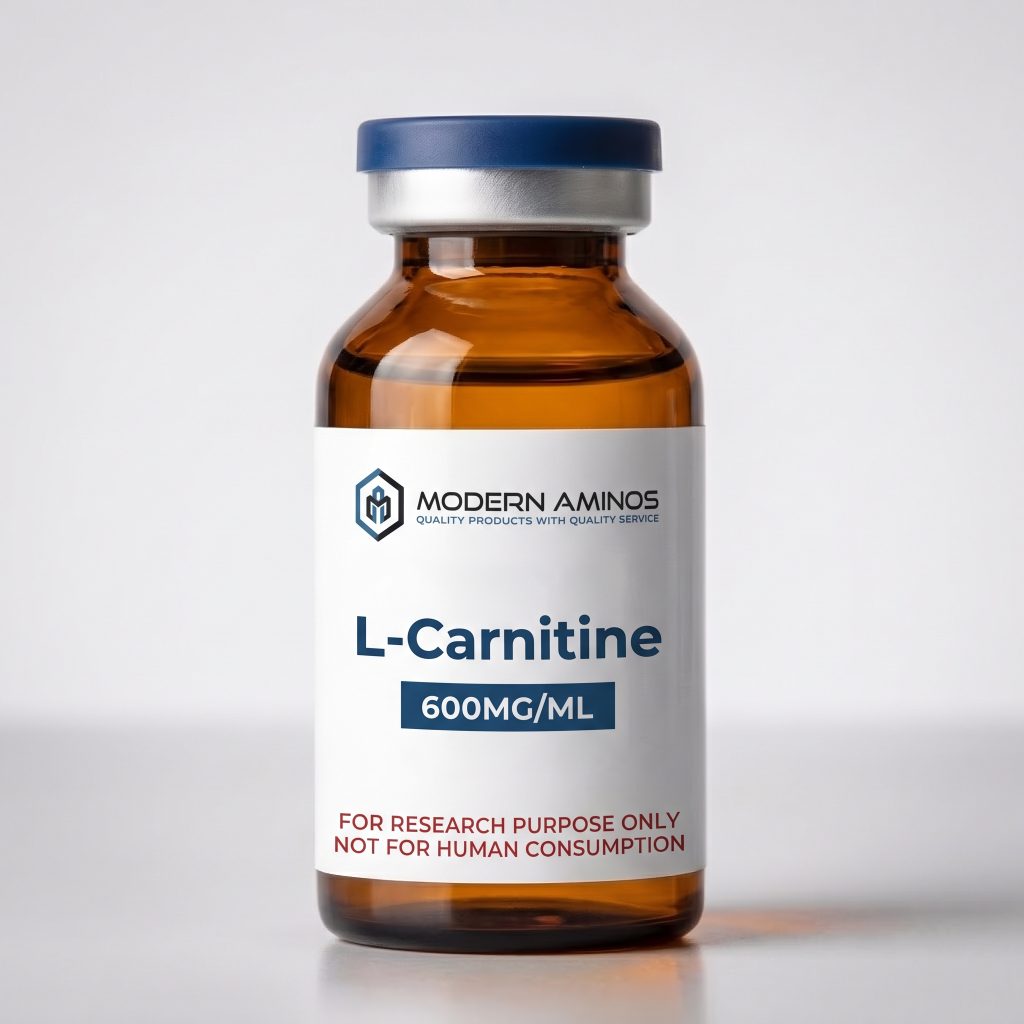
L-Carnitine (20ML) Carnitine shuttle Single-component L-carnitine at 600 mg/mL CPT1/CPT2 acyl transport
L-Arginine Based Amino Blend (Nitric Oxide Amino Blend) Urea-cycle amino acids L-arginine HCl, L-citrulline, L-ornithine HCl at 100 mg/mL each NOS and arginase branch work
L-Carnitine / CDP Choline Based Amino Blend Carnitine + CDP-choline CDP-choline 300 and L-carnitine 200 mg/mL Lipid transport and phosphatidylcholine synthesis

Frequently Asked Questions (FAQs)

1. Where can I buy L-Carnitine / L-Arginine Based Amino Blend with lot certificates?

L-Carnitine / L-Arginine Based Amino Blend is available at Modern Aminos as a 20 mL research solution (SKU A-005). FreedomDiagnostics reported lot BX-A-C1P5 on 9/12/2026 with identity confirmed by LC-MS (benzyl alcohol, carnitine, arginine and ornithine; benzyl alcohol is the 1% preservative in the formula), a clear liquid appearance, and no detectable microbial DNA by PCR. Vanguard Laboratory, an A2LA-accredited lab (Certificate #6377.01.01), also reported a USP <71> sterility result of “Conforms – No Growth” (PASS) on 5/29/2026. If you want to buy L-Carnitine / L-Arginine Based Amino Blend as a documented reference material, each certificate is in the Certificate of Analysis tab.

2. What does L-Carnitine / L-Arginine Blend contain per mL?

Per the Modern Aminos manufacturing formula (SKU A-005), each mL contains L-Carnitine 400 mg/mL; L-Arginine HCl 100 mg/mL; L-Ornithine HCl 100 mg/mL. Carrier: water-based solution with benzyl alcohol (1%) as the preservative.

3. Is L-Carnitine / L-Arginine Blend a peptide or a supplement?

No. None of its 3 components is a peptide; it is a solution of free amino acids and small molecules supplied for laboratory research, not as a supplement.

4. What are the PubChem identifiers for the components?

L-Carnitine: CID 10917 (CAS 541-15-1); L-Arginine: CID 66250 (CAS 1119-34-2); L-Ornithine: CID 76654 (CAS 3184-13-2). The full identifier tables are in the Chemical and Molecular Data section above.

5. What is the main component of the L-Carnitine / L-Arginine blend?

L-carnitine at 400 mg/mL (CID 10917, CAS 541-15-1). L-arginine hydrochloride and L-ornithine hydrochloride are each 100 mg/mL in the manufacturing formula.

6. Why does the blend contain ornithine?

L-ornithine is the product of arginase acting on L-arginine (Wu & Morris, 1998) and the substrate of ornithine decarboxylase, the first committed step of polyamine synthesis (Pegg, 2006); the formula pairs it with its precursor.

7. Why does the certificate list benzyl alcohol?

Benzyl alcohol is the preservative in the manufacturing formula at 1%. The LC-MS identity list on lot BX-A-C1P5 detects it alongside carnitine, arginine and ornithine.

8. What does L-carnitine do in mitochondrial fatty-acid transport?

CPT1 converts long-chain acyl-CoA and L-carnitine to acylcarnitine at the outer membrane, and CPT2 reverses the reaction in the matrix; malonyl-CoA inhibits CPT1 (McGarry & Brown, 1997).

9. How does this blend compare to a single-target mitochondrial reference?

It supplies L-carnitine for acyl transport plus two arginase-branch amino acids, while DADA (Diisopropylamine Dichloroacetate) inhibits pyruvate dehydrogenase kinase. Together they cover fatty-acid and pyruvate entry points in mitochondrial fuel panels.

10. What format is L-Carnitine / L-Arginine Blend supplied in?

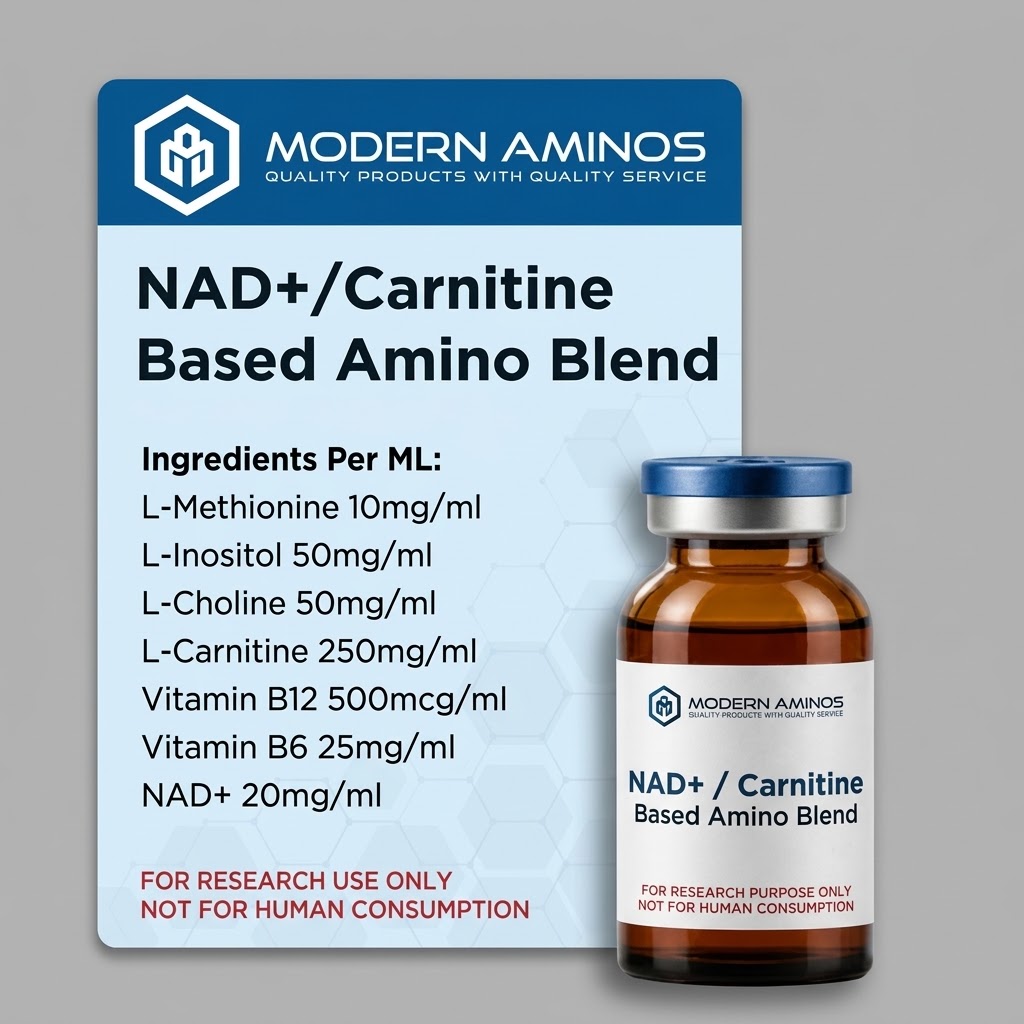
One format: a 20 mL vial of solution at the per-mL amounts listed above. The vial label lists the per-mL ingredients, and the Certificate of Analysis tab lists the certificates for the current format.

11. How does Modern Aminos verify L-Carnitine / L-Arginine Blend?

The FreedomDiagnostics certificate for lot BX-A-C1P5 lists identity by LC-MS and a PCR-based microbial screen; the finished format also lists a USP <71> sterility pass from Vanguard Laboratory (5/29/2026). Neither certificate reports per-component quantity, so this page makes no content claim. For background on chromatographic testing, see why HPLC testing matters.

12. How should L-Carnitine / L-Arginine Blend be stored in the lab?

Keep the sealed vial cool, dry and away from light, and follow the label on each lot. No storage temperature is printed on the label or the certificates, so this page does not state one.

DISCLAIMER: All compounds and research materials supplied by Modern Aminos are intended exclusively for in vitro laboratory research by qualified professionals. They are not medicinal products and have not been authorised by the European Medicines Agency or any national competent authority for human or veterinary use. They are not foods, food supplements, cosmetics or medical devices. Products must not be administered to humans or animals by any route and must not be used for in vivo experimentation or any other non-laboratory purpose. We will refuse or cancel orders, and may close accounts, where there is any indication of human or animal use. By purchasing, you confirm that products will be used only in a controlled laboratory environment by appropriately qualified personnel, in line with all applicable laws.

Related Products

Disclaimer!

All products are sold in powder (lyophilized) form and require reconstitution with a suitable diluent for research purposes only. Research supplies (e.g., syringes, bacteriostatic water) are not included. No dosing instructions are provided. We adhere to all local and state laws around Research Only Chemical sales. We are not a pharmacy, nor do we promote or provide any advice for human or animal consumption. Please review our terms and conditions carefully before making a purchase on our website.

You must be 21+ and a licensed research professional

By clicking ”I Agree” you confirm that you have read and accepted the Terms and Conditions stated above